
How to Prepare for a Doctor Home Visit: A Checklist
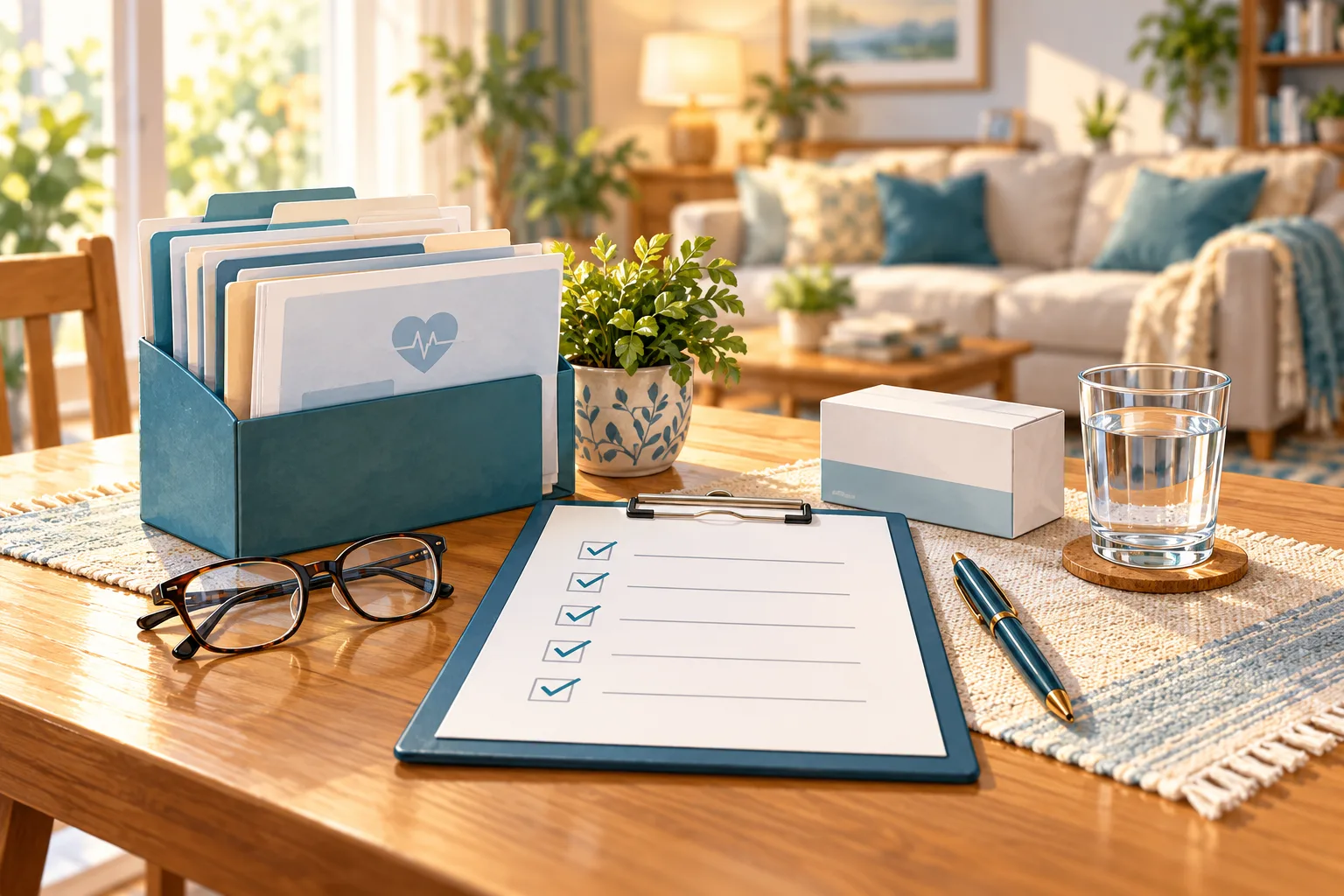
Keep the right information ready and make time for the questions that matter. Use this checklist before, during and after a home consultation.
You do not need to turn your home into a clinic before a doctor arrives. A little preparation can make the appointment easier to organise and help you explain why you asked for a visit. Start with the booking details, then gather the information you want the doctor to see.
This checklist is for a planned, non-emergency consultation. If the person's condition worsens while you are waiting, seek appropriate medical help rather than relying on the original appointment time.
1. Confirm the practical details
Check that the booking has been accepted and that you have the expected arrival window, consultation charge and a contact number for booking updates. Give the full address, floor, landmark and any gate or intercom instructions. Mention access constraints, such as stairs without a lift, before the visit.
Choose one person to coordinate the arrival. If you live in a gated building, let reception know about the expected visitor. Share only the access information needed; there is no reason to circulate medical reports in a residents' group to arrange entry.
2. Make a short note of the concern
Write down what prompted the visit, when it started and how it has changed. Put your most important questions first. If you have already recorded relevant readings on a clinician's advice, keep those records with their dates rather than trying to remember them during the appointment.
MedlinePlus recommends preparing questions and being ready to describe symptoms. A brief note can support that conversation; you do not need to decide the diagnosis yourself.
3. Gather medicines and records
Keep a current list of medicines, doses and timings, including non-prescription products and supplements. Note any known allergies or previous medicine reactions. If you are unsure of a medicine's name, have its labelled packaging available instead of guessing.
The National Institute on Aging's medicine guidance explains why an up-to-date list matters. Follow existing prescribing instructions and ask a clinician about any uncertainty; do not change treatment simply to prepare for a visit.
Put recent prescriptions, relevant test reports and discharge papers together. For digital reports, open the correct files in advance and ensure the device is charged. Keep older documents separately so the newest information is easy to find.
4. Make a comfortable space
Choose a quiet, well-lit area where the patient can sit or rest comfortably. Keep access clear and have a chair available for the doctor. You do not need to buy medical equipment for a routine consultation unless the service has specifically discussed a requirement with you.
Ask the patient who they want present. A family member can help with practical details, but leave room for a private conversation if requested. Let the service know beforehand about language or communication needs so you can discuss arrangements.
5. Leave with a clear plan
Before the doctor leaves, check that you understand the advice. MedlinePlus encourages patients to ask questions when something is unclear. Useful questions include:
What should we do next, and by when?
Are any investigations or referrals needed?
Which changes mean we should seek help sooner?
How and when should we arrange follow-up?
Keep the consultation notes, prescription and any follow-up instructions together. If another family member helps with care, agree with the patient what information can be shared and who will manage the next appointment.
Before you book
Explore our home healthcare services or contact Doctor At Home to confirm the arrangements for your address in Delhi NCR. Ask about any visit-specific preparation when the booking is confirmed.
This is a planning checklist, not a substitute for advice tailored to your medical needs.