
Planning a Doctor Home Visit for an Elderly Parent
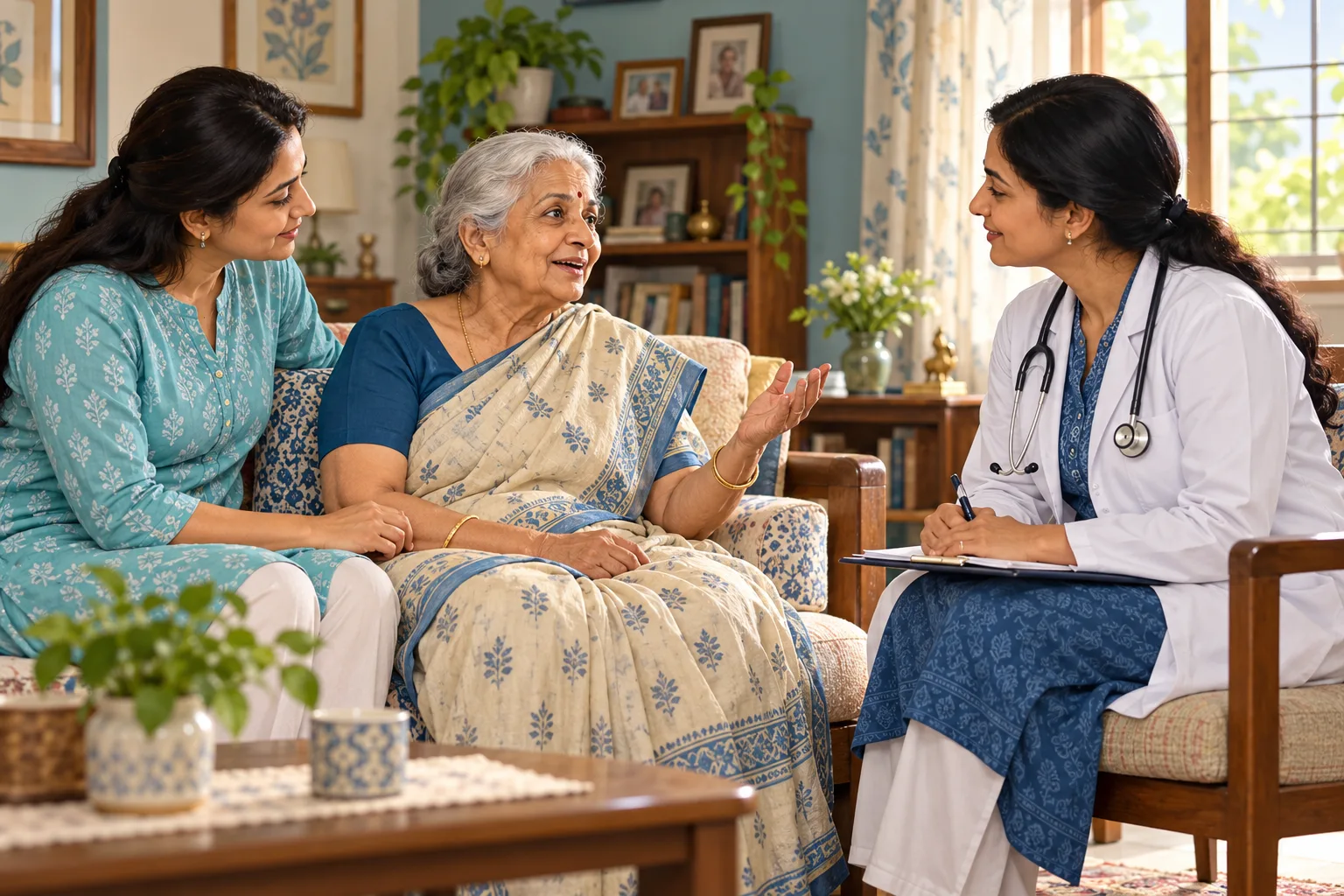
Help an older parent prepare for a home consultation while keeping their preferences, questions and independence at the centre of the visit.
Arranging a doctor home visit for an elderly parent involves more than choosing a convenient time. The patient may have their own questions, preferences and concerns, while different relatives hold different pieces of information. Agreeing on a simple plan beforehand helps everyone understand their role.
This guide is for families organising a planned consultation in Delhi NCR. Confirm with the service that a home assessment is appropriate for the concern; age or difficulty travelling alone does not determine the right setting for care.
Start with your parent's priorities
Explain why you are suggesting a visit and ask what your parent would like to discuss. Check whom they want in the room and whether they would like any part of the conversation to be private. Wherever possible, let them describe their experience directly before adding your observations.
The National Institute on Aging's guidance for accompanying caregivers emphasises supporting the older person's participation. Helping with an appointment should not mean automatically speaking on their behalf.
Agree on one family coordinator
If several relatives are involved, nominate one person to handle booking updates and gather questions. This avoids separate calls with conflicting information. Tell the service who will be physically present and who, with the patient's agreement, may need to join a discussion remotely.
For a parent living separately, confirm the address and entry arrangements with someone at the property. Make sure they know a visit is expected. Avoid promising an exact arrival time until the service has confirmed the booking and its current availability.
Bring specific observations, not assumptions
Prepare a brief account of the issue: what you noticed, when it began and how it differs from your parent's usual routine. For example, noting when help with a familiar daily activity became necessary is more useful than simply saying that they seem older or weaker.
Separate what your parent has told you from what you have personally observed. If family members disagree, write down the different observations rather than trying to settle on a diagnosis. Give the doctor room to ask the patient questions and assess what the information means.
Put the care information in one place
Collect relevant prescriptions, recent reports, hospital discharge instructions and details of clinicians already involved. Keep a list of current medicines and supplements with amounts and timings, along with known allergies. The National Institute on Aging recommends maintaining an accurate medicine list.
If more than one person helps with medicines, check that everyone is referring to the same current instructions. Bring uncertainties to the doctor rather than quietly changing the schedule. The purpose of preparing the list is to make the consultation better informed.
Make communication comfortable
Arrange a quiet space and keep glasses or hearing aids within reach if normally used. Ask about language needs in advance. Give your parent time to answer without several people talking over one another. A notebook can help the family remember the agreed next steps.
If moving to another room is difficult, discuss the practical arrangements with the service before the visit. Ask what access or assistance is needed; do not assume the clinician will be able to provide lifting or transfer support.
Decide who will follow up
At the end, clarify any recommended tests, appointments or changes to the care plan. Agree who will arrange them, who will keep the records and how information will reach other carers with the patient's permission. Ask what changes require medical attention sooner and how to get help.
A planned home consultation is not an emergency response. For a possible medical emergency, call 112, India's emergency assistance number, instead of waiting for an appointment.
Read about our elderly care services or contact Doctor At Home to discuss a suitable visit and availability for your parent's address.
This article offers general planning information and does not replace an individual medical assessment.